
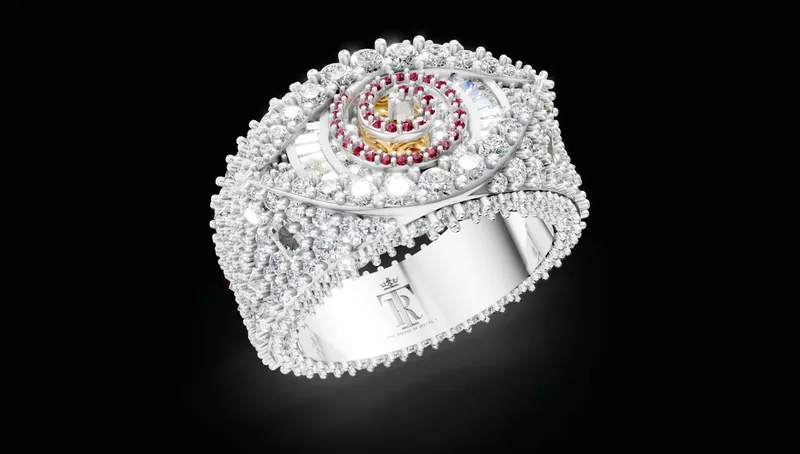
When you design a custom piece, one of the first decisions is the diamonds: natural or lab-grown. Both are real diamonds, and both can be beautiful. The right choice depends on what matters most to you. At THE HOUSE OF ROYAL T we work with both, so this guide is not here to sell you on one. It lays out the differences plainly so you can decide with confidence.
What is the difference?
A natural diamond formed deep in the earth over a very long time and was mined. A lab-grown diamond is created in a controlled setting using technology that reproduces the conditions in which diamonds form. The result is the same material: a lab-grown diamond is chemically, physically, and optically a diamond. It is not a simulant such as cubic zirconia or moissanite, which are different materials that only resemble diamond.
Can you tell them apart?
Not by looking. A natural and a lab-grown diamond of similar quality look the same to the eye, and both have the hardness and brilliance diamonds are known for. Telling them apart requires specialized gemological equipment. In everyday wear, they look and perform the same way.
How they compare
Price
Lab-grown diamonds generally cost less than natural diamonds of a similar size and quality. That difference can matter a lot in a custom piece. It might mean a larger center stone in an engagement ring, or more stones across a pendant, chain, or set of grillz, for the same overall budget.
Rarity and story
Natural diamonds are rare and formed by nature over a long period, and for many people that origin is part of the meaning, especially for an engagement ring or a piece meant to be passed down. Lab-grown diamonds can be produced to order, so they do not carry that same rarity.
Long-term value
If resale or long-term value is a priority for you, ask about it during your consultation. Natural and lab-grown diamonds are generally viewed differently in the market, and it is worth understanding that before you choose. For many clients, though, a custom piece is something to wear and keep rather than an investment, and the choice comes down to look, size, and meaning.
Quality
Both natural and lab-grown diamonds come in a range of qualities. Cut, color, clarity, and carat weight apply to both, so a lab-grown diamond is not automatically better or worse than a natural one. What matters is the individual stone. We help you compare actual options rather than categories.
How to choose
A few questions usually make the decision clearer:
- What matters most to you: size, origin, or budget? If you want the most visual impact for your budget, lab-grown is often the practical choice. If natural origin matters to you, choose natural.
- What kind of piece is it? For a pavé field or a heavily iced design with many small stones, lab-grown can make a fuller design possible. For a single meaningful center stone, some clients prefer natural.
- Will it be passed down? If the piece is meant to become an heirloom, think about how you and your family view natural origin.
- Do you want to mix? In some designs it can make sense to combine choices, for example one type of diamond for the center stone and another for accent stones. We can talk through whether that suits your piece.
Gemstones are an option too
Diamonds aren’t the only choice. We also work with premium gemstones, whether as a center stone, as accents, or as color within a design. The CAD visualization above shows a ring design with a ruby halo. If color is part of your idea, bring it to the consultation.
The setting matters as much as the stone
Whatever you choose, your diamonds are set in solid gold, in yellow, white, or rose, or solid silver for select designs. Nothing we make is plated, and every piece is backed by our Lifetime Quality Guarantee. You see your design as a CAD visualization and approve it before anything is hand-crafted.
Decide with us, not alone
It is much easier to choose when you can talk it through with real options for your own design. In a private consultation at our appointment-only house at 234 Fayetteville St in downtown Raleigh, we go through natural and lab-grown choices for your piece, including how each affects the look and the budget. If you are designing an engagement ring, our custom engagement rings page explains how that process works.